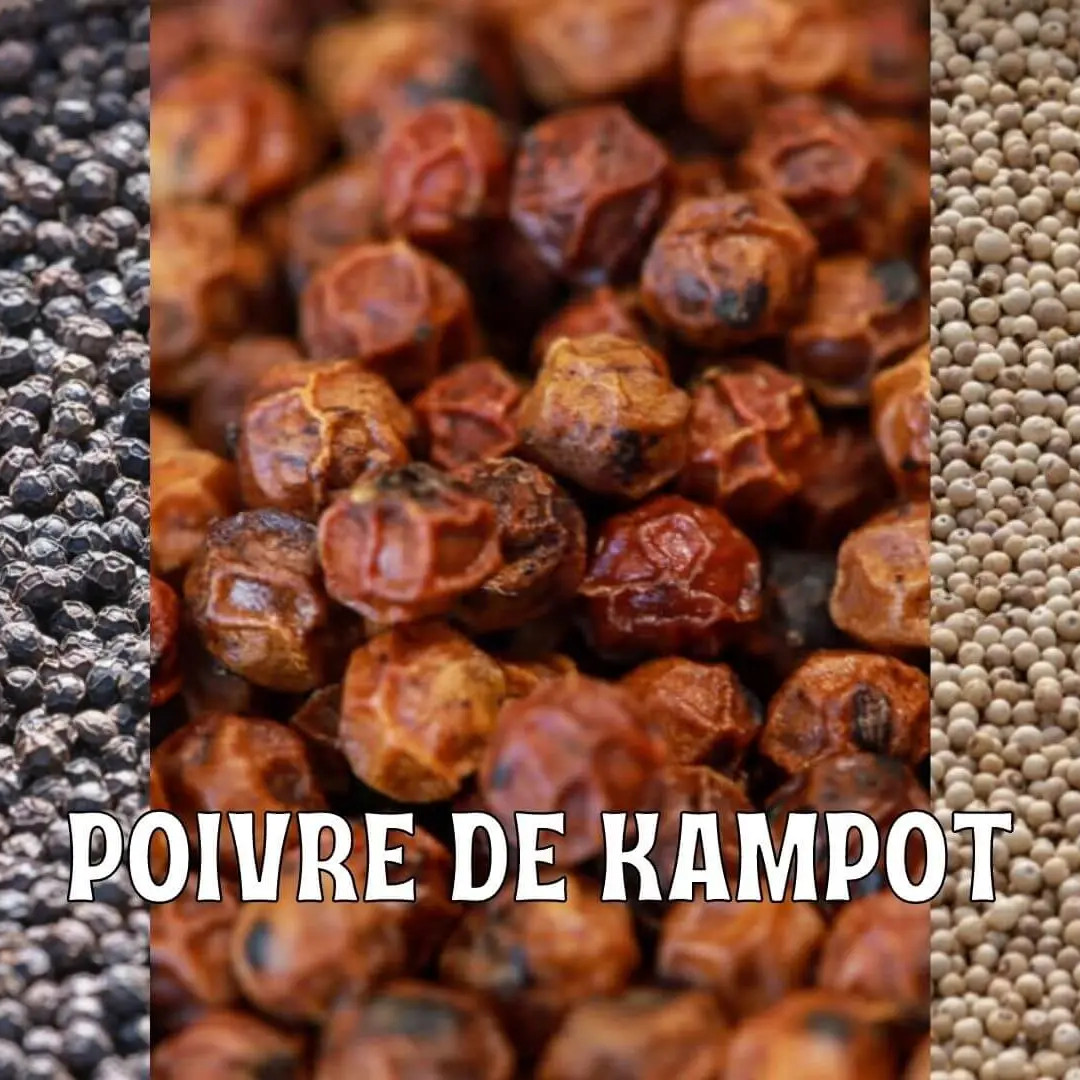
Poivre de Kampot
It is considered as one of the best peppers in the world and it is not for nothing, crack for this pepper of exception and discover finally what is a true pepper. Achat Poivre de Kampot
For the record:
The Kampot pepper, here is one that we hear about at the moment! At the same time it deserves it, it is considered one of the best peppers in the world. It is a pepper that comes from Piper Negrum, the famous tropical vine, which makes it a real pepper, unlike its cousins the cubeb or the Jamaican pepper or the Sichuan pepper for example.
It is cultivated in an ecological way in the South of Cambodia, in a production of small farmers.
It takes its name from the province in the south of Cambodia where it is cultivated: the province of Kampot. It is also found in the province of Kep. In this Cambodian region of Kampot, another variety of pepper is cultivated, also considered one of the best in the world: the long pepper of Kampot.
What makes it a special spice in Cambodia is that it is the very first Cambodian agricultural product to have received a PGI (Protected Geographical Indication), a label that protects this pepper since April 2, 2010. The Protected Geographical Indication (PGI) is a sign of identification that designates products whose quality or reputation is linked to the place of production, processing or development.
It is not for nothing, because its unusual flavor comes, somewhat like our wines, from the exceptional soil of Kampot and the method of cultivation practiced in the province.
The cultivation of Kampot pepper can be traced back to the 13th century. In the 19th century, a sultan of what is now Indonesia set fire to all the pepper trees in Indonesia so that the Dutch settlers would not take them. At that time, it is the supplier of pepper of the whole world which will be replaced by Cambodia the time to replant the Indonesian plants.
For the anecdote, the Kampot pepper is a survivor: indeed, from 1975 to 1979, after the Khmer Rouge took power, a radical Cambodian political and military communist movement, the cultivation of Kampot was completely abandoned for the cultivation of rice. After 1979, some farmers, as true resisters, resumed its cultivation locally, which has spread again throughout Kampot and Kep.
Second small anecdote, Marguerite Duras, who lived in the province of Kampot during her adolescence, spoke about the famous pepper in her novel A dam against the Pacific.
What is the flavor of Kampot pepper?
Kampot pepper has a fruity aroma, with notes of pear and apple, subtly minty, with sublime hints of eucalyptus. It will quickly outshine all your other peppers!
As with all peppers, there are red, green, white and of course black peppers, with slight differences between each:
Green Kampot pepper is not exported, it can only be consumed locally. It is harvested before maturity, still tender, it is less spicy than the black one but has an extraordinary aroma. It is often consumed fresh, then it is preserved in brine.
The black pepper of Kampot is the berry almost mature, it is powerful and subtle at the same time. With a deep and intense taste, specialists find floral notes with a touch of eucalyptus and fresh mint.
It is sold dried here, but to discover all its nuances, the best is to consume the fresh Kampot black pepper, preserved by fermentation, the closest to fresh pepper, in terms of flavor, texture, use and benefits.
- Red Kampot pepper is the fully ripe fruit where its rind turns red. It is moderately pungent, yet very subtly fragrant. It has fruity and flowery nuances marked by a strong taste of lemon. It is an excellent alternative to the red pepper of Pondicherry, also renowned among Indian peppers for its exceptional quality.
It should not be confused with the Chiloé pepper which can resemble it a little.
- The white pepper of Kampot is in fact red pepper that has been removed from its pericarp. It is similar to black pepper but less pungent and irritating. It has very delicate flavors of citrus, undergrowth and fresh herbs.
For peppers with a different flavor, we recommend
Belem pepper (Brazil)
Penja pepper (Cameroon)
Malabar pepper
Kerala pepper
Phu Quoc pepper
large organic Jumbo peppercorns
Wayanad pepper
How to use Kampot pepper in cooking?
It is an exceptional pepper, but like all peppers, its use as a condiment extends to all dishes!
Like all peppers, it is essential to buy it in seeds and to grind it in a mill or to crush it at the last moment in order to take advantage of all its flavors and its properties for health. Be careful, if you overcook it, it will become bitter.
Generally speaking, you can use Kampot pepper in all meats, white or red, in all raw or cooked vegetables, starches, salads, marinades, dishes in sauce, all fruity desserts (pie, crumble, fruit salads) and chocolate desserts (muffins, cookies, cakes, fondants, etc.).
It works wonders in all fish, especially fine fish. There is no dish that kampot pepper cannot accompany.
In relation to the differences in flavor of the different varieties of kampot, and to be more precise:
Black kampot pepper is perfect for red meats,
White kampot pepper is perfect with seafood, shellfish, fruits, pepper sauces, béchamel,
the red kampot pepper will perfectly flavor strong meats such as game,
Green kampot pepper goes very well with duck, pâtés and terrines or vegetable dishes.
It's up to you to do your own tests!
Some common questions about Kampot pepper
Here is a list of other common questions we receive about this spice:
What is the price of Kampot pepper? The price per kilo of a real black Kampot pepper certified PGI varies from 120 € to 200 € per kg, depending on the seller and the quality of the pepper. For white and red pepper, prices are generally higher than black pepper, and if it is an organic Kampot pepper, then prices will explode.
Where to buy Kampot pepper? You can buy your Kampot pepper on the spice island. We focus on value for money rather than just cheapness, so you will find the best quality Kampot pepper at the best price.
Where to buy ground Kampot ? Nowhere, and if you find it, don't buy it. Pepper loses its taste and properties very quickly once ground, buying powdered Kampot pepper would be an offense to this great pepper.
How to store Kampot pepper? Like all well-prepared peppercorns, Kampot Pepper is stored in a dark and humid place, so you can keep it for years.
What are the health properties of Kampot pepper?
Here are some good reasons, in addition to its taste properties, to buy Kampot pepper.
It has the same health benefits as peppers from the Peper Negrum vine, thanks to piperine, we have detailed all the health benefits of piper negrum pepper in a special article, check it out!