
Haiku Deck Superstar
1 Haiku Deck
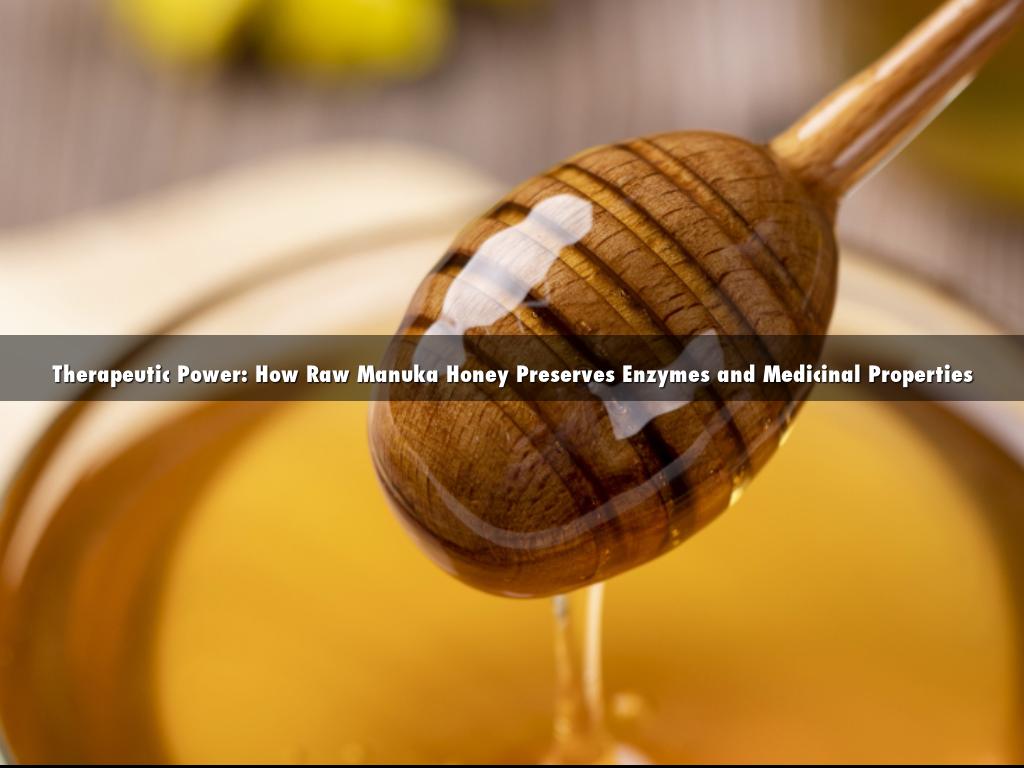
Therapeutic Power: How Raw Manuka Honey Preserves Enzymes and Medicinal Properties
1 Slide2 Views
Business
The remarkable therapeutic potential of premium honey varieties from New Zealand lies largely in their unprocessed state. Understanding how raw manuka honey maintains its beneficial enzymes and compounds offers insight into why these natural products have gained such recognition for their exceptional properties.
The Crucial Difference of Raw Honey
Unlike conventional honey that undergoes extensive processing, raw honey remains in its natural state after extraction from the honeycomb. This minimal intervention approach preserves delicate enzymes, beneficial bacteria, and bioactive compounds that would otherwise be diminished or destroyed during pasteurization and filtration.
For premium varieties like manukora 850, this preservation of natural integrity is essential to maintaining the full spectrum of beneficial properties. The difference between raw and processed honey isn't merely philosophical—it represents a fundamental distinction in composition and effectiveness.
Key Enzymes Preserved in Raw Manuka
Raw manuka honey contains several important enzymes that contribute to its therapeutic properties: Glucose oxidase, which produces hydrogen peroxide, remains active in raw honey but is typically deactivated by heat during conventional processing. This enzyme contributes to manuka's natural preservative qualities. Diastase (amylase) helps break down complex carbohydrates and remains fully functional in raw honey. Heat processing significantly reduces this enzyme's activity. Invertase, which converts sucrose into more easily digestible glucose and fructose, maintains its effectiveness in unprocessed honey varieties. These enzymes, along with others naturally present in honey, remain biologically active in raw products, contributing to their overall therapeutic properties.
Methylglyoxal Stability in Raw Products
The methylglyoxal (MGO) compound, which distinguishes premium manuka honey, demonstrates greater stability in raw, unprocessed varieties. Products with high MGO ratings, such as those reaching 850 mg/kg, maintain their potency more effectively when the honey remains in its natural state. Heat processing can potentially accelerate MGO degradation, while raw honey's natural matrix provides a protective environment that helps maintain this key compound's stability over time. This preservation of MGO integrity is crucial for maintaining the honey's signature properties.
Beneficial Phytochemicals Maintained in Their Natural State
Raw manuka honey contains a complex array of plant-derived compounds that contribute to its therapeutic profile: Flavonoids and phenolic acids from manuka nectar remain intact in raw honey, offering their natural benefits. Aromatic compounds that give manuka its distinctive sensory profile carry beneficial properties that complement the honey's primary active components. These phytochemicals work synergistically with enzymes and other compounds to create the complete therapeutic profile that makes premium raw manuka honey so valued.
Living Elements in Raw Honey
Perhaps most surprisingly, raw manuka honey contains beneficial bacteria and yeasts that form part of its living matrix. These microorganisms contribute to the product's unique properties in ways that are still being discovered through ongoing research. Conventional processing eliminates these living elements, while raw honey preserves this natural microbiome. For products like raw manuka honey, this preservation of living elements represents an important aspect of their complete therapeutic profile.
The Holistic Therapeutic Approach
The therapeutic power of raw manuka honey stems from the preservation of its complete natural composition—not just individual compounds in isolation. This holistic approach maintains the synergistic relationships between enzymes, phytochemicals, and bioactive compounds that would otherwise be disrupted through processing. Research increasingly supports this integrated view, suggesting that isolated compounds may not deliver the same benefits as the complete natural product. Premium varieties like manukora 850 exemplify this approach, offering the full spectrum of manuka's natural properties in their unaltered state.
Optimal Storage for Preserving Therapeutic Properties
To maintain the therapeutic properties of raw manuka honey: Store in dark glass containers that protect against light degradation Keep at cool room temperature (below 70°F/21°C) Ensure containers remain tightly sealed Avoid introducing moisture or contaminants Following these guidelines helps preserve the enzymatic activity and bioactive compounds that make raw manuka honey such a remarkable natural product.
The Value of Natural Preservation
The therapeutic potential of premium raw manuka honey represents nature's wisdom preserved through minimal intervention. By maintaining the honey's natural integrity from hive to jar, producers ensure consumers receive the complete spectrum of beneficial compounds and living elements that contribute to its exceptional therapeutic profile.